Running a restaurant in India today is a margin game with no cushion. Between rising ingredient costs, LPG scarcity, and aggregator commissions, most operators are left fighting for 5-10% net margins. If you are a restaurant owner, you know that even small inefficiencies can wipe out your profit in a big way.
The challenge that most restaurant owners or restaurant managers struggle with is not that they don’t know that margin leaks are happening, but they don’t know where they are happening from and how do you plug it?
This blog will help you figure out 4 ways of streamlining your business processes so you can cost-cut your way to profitability without compromising on service or quality of dishes.
1. Engineer Your Menu for Profit, Not Just Popularity
Did you know that when the Sea Lounge at Taj Mahal Palace Mumbai changed its menu a few years ago, regular customers actually wrote in asking for the old dishes to be brought back?
That’s the power of a menu. Your menu is not just a list of dishes; it is your identity.
It is what people remember, recommend, and come back for. The freshness of ingredients, the familiarity of flavours, all these things keep your customers loyal. So what you serve must be thought of strategically, as your menu is also your biggest margin lever.
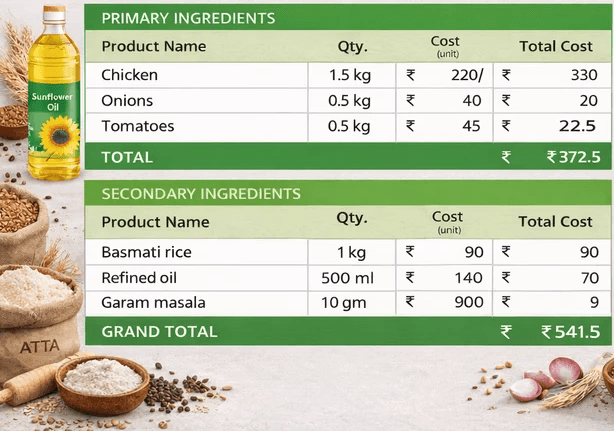
In India, your food cost should ideally sit around 25–35% of the selling price. Yet most kitchens don’t track this at a dish level, which means:
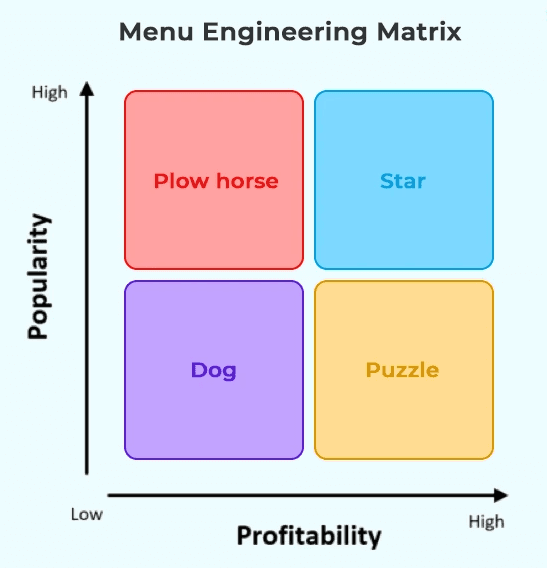
Some of your bestsellers might actually be your least profitable items
Small increases in ingredient prices (like oil, onions, masalas, dairy) quietly eat into margins
And over time, your most popular dishes can become your biggest cost centres
What to do:
Recalculate margins monthly
Swap volatile ingredients seasonally
Push high-margin dishes through menu design
Not every bestseller is profitable, and that’s where margins quietly disappear.
2. Audit Your Food Waste Like It’s Cash Leakage
Waste in restaurants is an accepted reality. At that moment, it doesn’t feel like a big loss - a tray of chopped onions that didn’t get used, or a batch of gravy that went bad overnight. But if you add this up across 30 days, it becomes serious money. E.g., If you run a mid-sized cloud kitchen and your daily raw material cost is Rs 10,000, then even a 5% waste is Rs 500 a day.
At single-digit margins, waste is not a side issue; it becomes a core business problem.
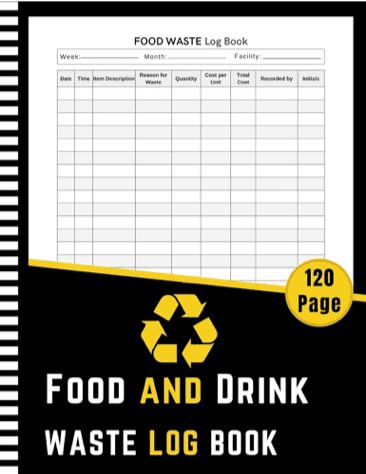
What to do:
Track waste daily
Standardize portions
Enforce FIFO strictly
Even a 5% reduction in waste can directly improve profitability.
3. Fix Your Sourcing: Cut Out Middlemen + Stop Last-Minute Buying
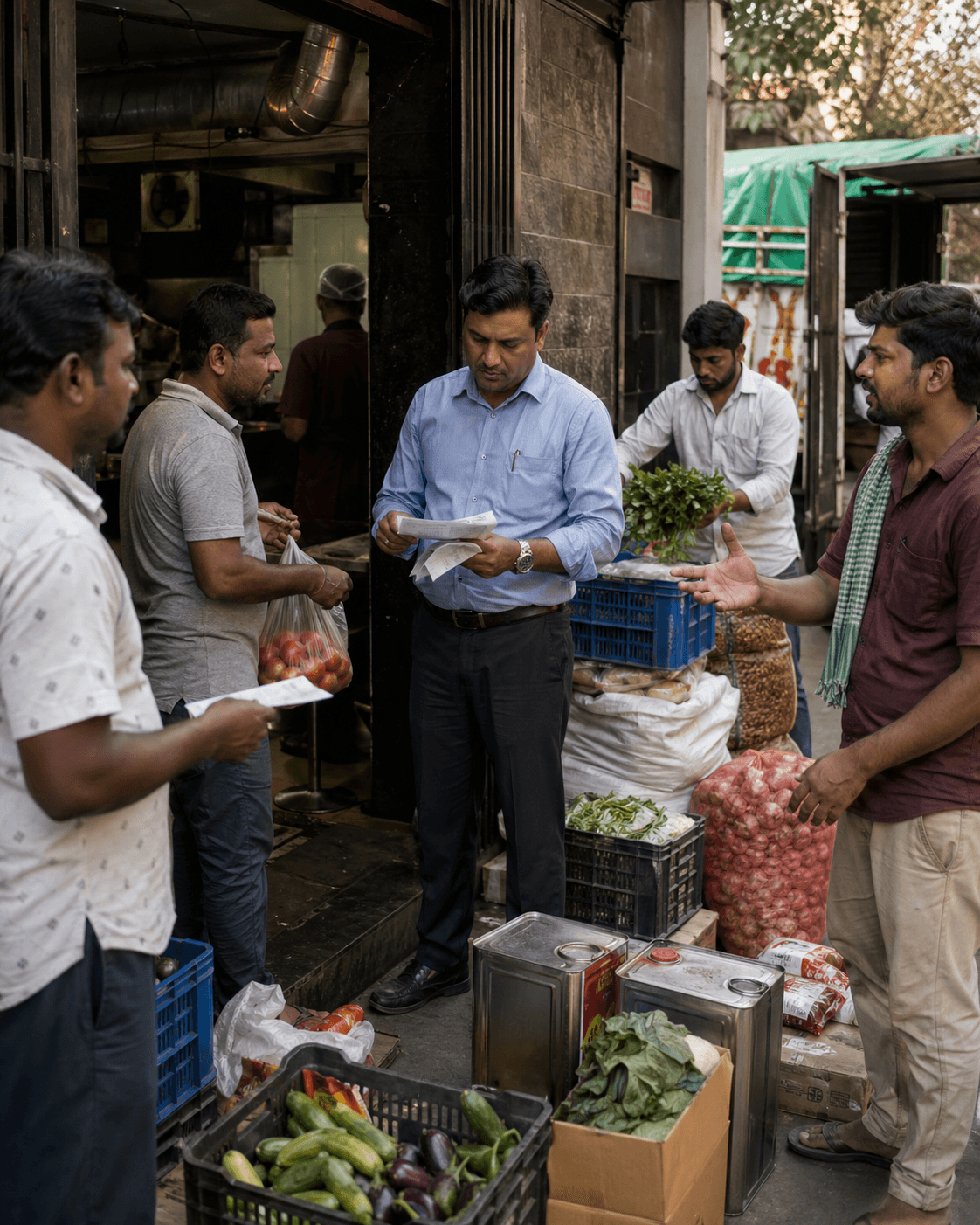
Bulk sourcing or bulk procurement for your restaurant business is where most margins are silently destroyed, especially if purchases are recurring in nature, like fresh veggies and fruits, kitchen staples like oils, masalas, flour, or menu items like packaged juices, canned drinks, etc. Take masalas for example. Traditional sourcing in India is layered:
Manufacturer → Super stockist → Distributor/Wholesaler → You
Each layer adds cost, because each layer adds its own margin. And what makes it even trickier in India is that there are only a handful of active distributors or wholesalers in a certain area, which means
Limited options
Little price transparency
And often, locally entrenched monopolies
So even if you want better pricing, you’re often stuck choosing between the same 2–3 suppliers, all quoting very similar (and inflated) rates. Now add that to how most restaurants actually purchase:
Small quantities
Last-minute orders
Zero price benchmarking
And you end up paying the highest possible price, every single time.
What smart operators do differently
★ Plan procurement in 4–7 day cycles - So you’re not forced into expensive, last-minute buying
★ Consolidate vendors - More volume with fewer suppliers = better pricing power
★ Buy in bulk where possible - Especially for non-perishables and high-usage items
★ Move closer to the source - Fewer intermediaries = better margins + more control
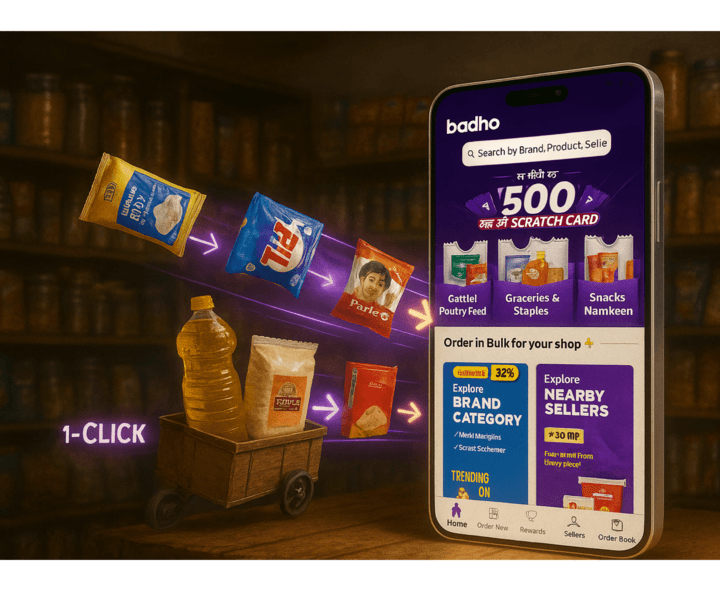
This is also why many restaurant operators are exploring wholesale/ bulk buying platforms like Badho Wholesale. Badho breaks the local dependency loop by offering:
Direct-From-Company supply → reduces reliance on local distributor monopolies
Better pricing (20–40% margins) → without negotiating with multiple middlemen
Fresher inventory → Products come straight from the brand, so they come with lower expiry risk
Access to new brands → Badho gives you more choice at comparable quality and better rates.
With Badho wholesale, you no longer have to buy from whoever is available. Now buy from whoever makes business sense.
That’s what Donna Aunty’s Café did recently. Based in Greater Noida, Donna Aunty was sourcing from 6–7 local vendors. There were frequent stockouts (because of severely fluctuating demand), which meant emergency buying at higher prices. And because she had to ‘make do’ with what she got, the quality became inconsistent across batches. After shifting to a planned sourcing model (weekly cycles + fewer vendors + partial brand-direct sourcing):
Procurement costs dropped by ~18–22%
Stockouts reduced significantly
Kitchen operations became more predictable
For Donna Aunty, the biggest mindset shift was that she stopped reacting to demand and started planning for it.
4. Switch to Quality-Equivalent Brands (Smart Swaps)
This may be a controversial opinion, but when it comes to bulk buying or institutional buying, brand loyalty in procurement is often just an expensive habit.
In many categories, you can reduce costs significantly without impacting taste. Start small and try categories that have many players, like masalas, packaged fruit juices, or dry fruits.
What to do:
Run blind tests
Pilot before scaling
Choose consistency over brand recall
Your customer doesn’t care what brand your kitchen uses; they care about consistency.
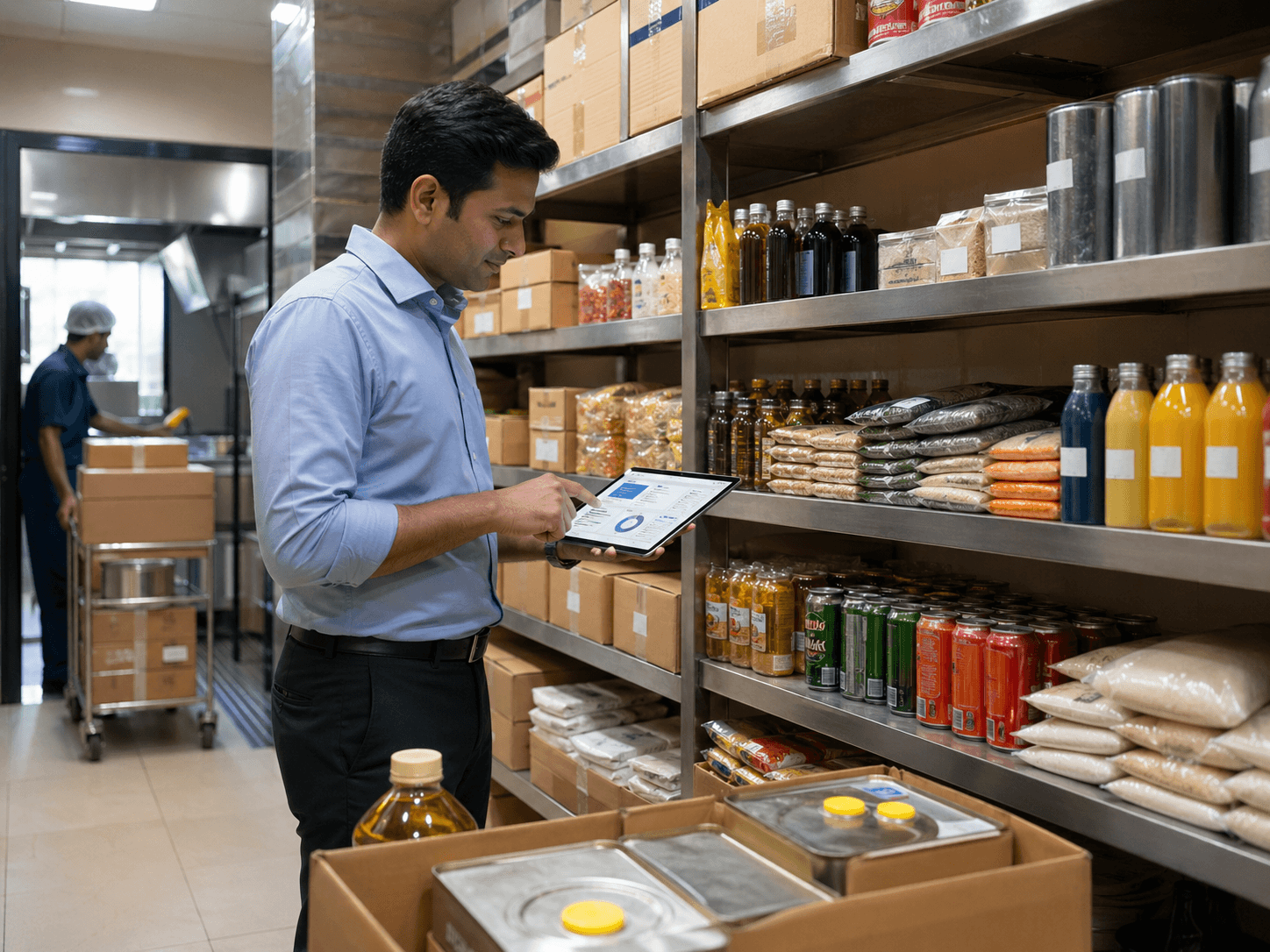
Cost-cutting should not be about cutting corners, it should be about smart planning.
Margin protection isn’t one big decision. But it is very closely linked to the reputation of your product and service, so make sure you don’t abandon quality for profit. If you make a series of small, disciplined decisions, you will definitely see tangible improvements in your overall ROI and profit
If you would like to order from Badho Wholesale, simply download the Badho Wholesale app, explore the products, and go shopping!